Empty Wine Pails make great storage containers. We fill ours with pasta,
rice, Kraft Dinner, Corn, wheat, sugar, salt and other dry foods.
Some, like pasta, we leave in the original packaging and pack them into the pails.
Others, like corn, wheat and rice, we open and dump into the clean
pails. You must clean and dry the pails thoroughly before using of
course.
Once we have about 25 pails filled, we open our oxygen absorbers and drop those inside then we seal the lid tightly.
We label all the pails with the date, what food is in each and how much
is there, plus the name of the person in our community who contributed
the specific food item. We do this in case plans change and a member
wants to go elsewhere. We can then fairly easily give them whatever food
they have contributed to the group.
Then we store the foods in various spots - some get the spare room in
the basement but it has a woodstove so it gets really hot in the winter.
Some foods can't be stored there. Others go out to one of our storage
sheds. The outdoor sheds are only for foods that can withstand extremes
of temperature.
The nice thing about the pails is how they stack. The drawback is that
they are cylindrical in shape. We could stack better if they were square
or rectangular. We do have rectangular pails but they are smaller so we
use those for other food items such as our saved Chinese food condiment
packages (Soy sauce and plum sauce) and our saved McDonald's condiment
packages (vinegar, ketchup, salt and pepper)
Showing posts with label Emergencies. Show all posts
Friday, September 25, 2015
Tuesday, September 22, 2015
The Robots Are Coming Part 1
| Robots will change everything |
When we think of Prepping we tend to think of disasters like floods or pandemics, however another part of prepping we often overlook is what I call societal changes. Societal changes are unexpected events or developments that fundamentally change the way humans do things. A few examples from history would include the invention of writing. The use of fire. The invention of farming. The industrial revolution. The list goes on....
Now you are probably saying to yourself that the events I have listed are positive things and you would probably be right. However big changes, even positive changes, often bring great pain in the short term. I am not old enough to remember the discovery of fire but human nature being what it is you can bet the people that had fire used it to gain advantage over those who did not. Any history book will tell you of the pain the industrial revolution brought to millions who had to adjust to life in a new world.
So why the history lesson?? Many experts beleve that humanity is right on the edge of a big change. A change that will rank with the big events of human history. An event that is going to change the very nature of how we live our lives and run our civilization. The robots are coming.
Actually the Robots are already here. As I sit here writing this Blog post my robot vacuum is happily scooting around my feet as it cleans the dirt from my floor. Soon my floor washing robot will start up and do the kitchen floor. And right now an engineer is riding his self driving car as he weaves in and out of highway traffic.
So what does it all mean? And why as a prepper should I care? Stay tuned for part 2.
Monday, September 21, 2015
Preparing For an EMP with a Homemade Faraday Cage
That means your vehicle won't work. Your walkie talkies won't work. You get the picture.
To protect your electronic devices you need a Faraday cage. But you can also make one. Here are some suggestions for a homemade Faraday cage
1. Buy a metal garbage can and store the devices in it. It should protect from the EMP surge.
2. Line a shopping bag or backpack with multiple layers of aluminum foil.
Friday, September 11, 2015
More Floods In Japan Show Us We Must Be Ready
![]() |
| Are You Ready For A Flood? |
Several experts and environmental groups have called this yet another example of the effects of Global Warming. Whatever the reason for this latest round of flooding its a reminder to all of us that we need to be ready for such disasters. If you live in an area that is near water (rivers, lakes, ocean) you must have a flood survival and evacuation plan.
A Flood Survival Plan can be as simple or as complicated as you want to make it but at a minimum you must have at least two parts. A shelter in place plan and an evacuation plan. Floods can happen without warning so your shelter in place plan involves getting to the highest point in or on top of the building you live in. You may only have seconds to react so you must have every thing you need set aside and ready to go.
Your evacuation plan involves getting yourself away from the flood waters and to high ground or a high structure. Again you may only have seconds to react so you must have your plan and everything you need ready to go before the flood hits. It will be too late if you wait until the water is at your door.
Stay tuned for more on how to prepare your flood plans in another post.
Image courtesy of khunaspix at Free Digital Photos.net
Wednesday, September 9, 2015
Prepping on a budget.
Over the years I have had many people say to me how much they would like to Prep but they just don't have the money, the space or the time. So here is the first of several Periscope videos on how to Prep without breaking the bank or having to fill your house with supplies.
So take a look at my video
Prepping on a budget
Sunday, September 6, 2015
Prepping: Heat Your House For Free
![]() |
| Free Heat. Tossing a hunk of pallet on the fire. |
I burn shipping pallets or skids as we call them around here. Yep shipping pallets are free for the taking at most factories and stores. One skid will heat my house for 6hrs so that would be 4 a day. However I let the fire go out when I am sleeping ( That's what blankets are for ) so its only about 2 skids to keep me nice and toasty for the day.
Now to be honest I do burn a little bit of wood that is grown right here on my farm but not much. Skids are thin cut wood and that burns fast. So when a break is needed from filling the stove I will toss a log on. I don't like to get up from the table when eating just to keep the fire going.
![]() |
| Getting ready to cut up my skids for today. |
Now I realize this only works for some people. You must have a wood stove or fire place. You must have a truck, van or trailer to haul the skids home. And you must live close to the factories or stores that have the skids. Now gas is expensive so you don't want to make special trips to get your skids. I know each place in my town that has them so on a trip to the coffee shop I can grab the skids from the places that are along the way. When I go to the bank I know the hardware store around the corner will have some. I burn almost no extra gas to get them. You get the idea.
This will not work for everyone but it works for me and it reminds us that to survive we need to use what we can find around us. WASTE NOTHING.
Friday, September 4, 2015
Winter Car Survival Kit
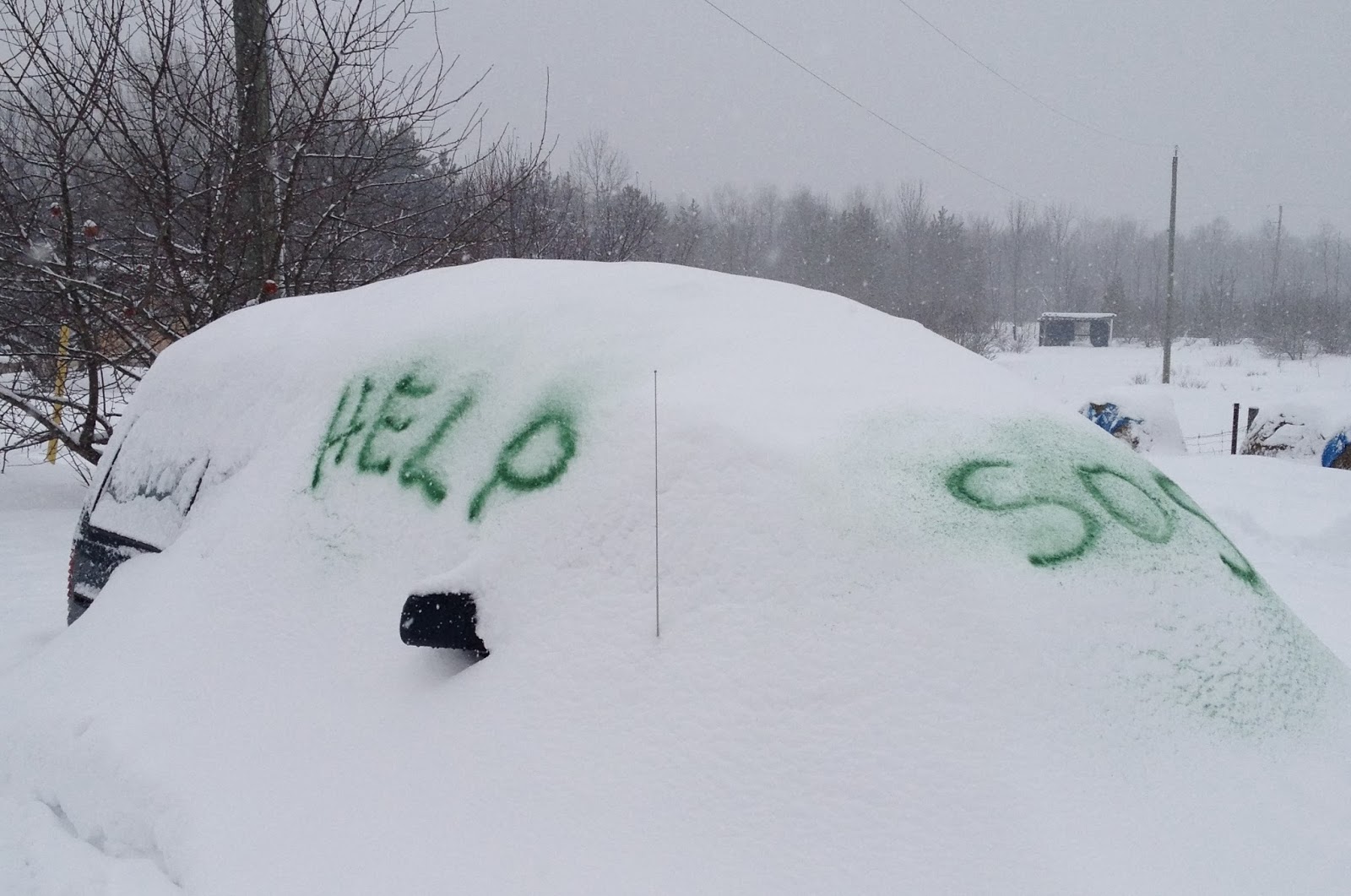
The last few years have seen winter storms in North America trap thousands of motorists in their vehicles for hours if not days. Make sure you have your Car Survival Kit with you. You never know when you may need it.
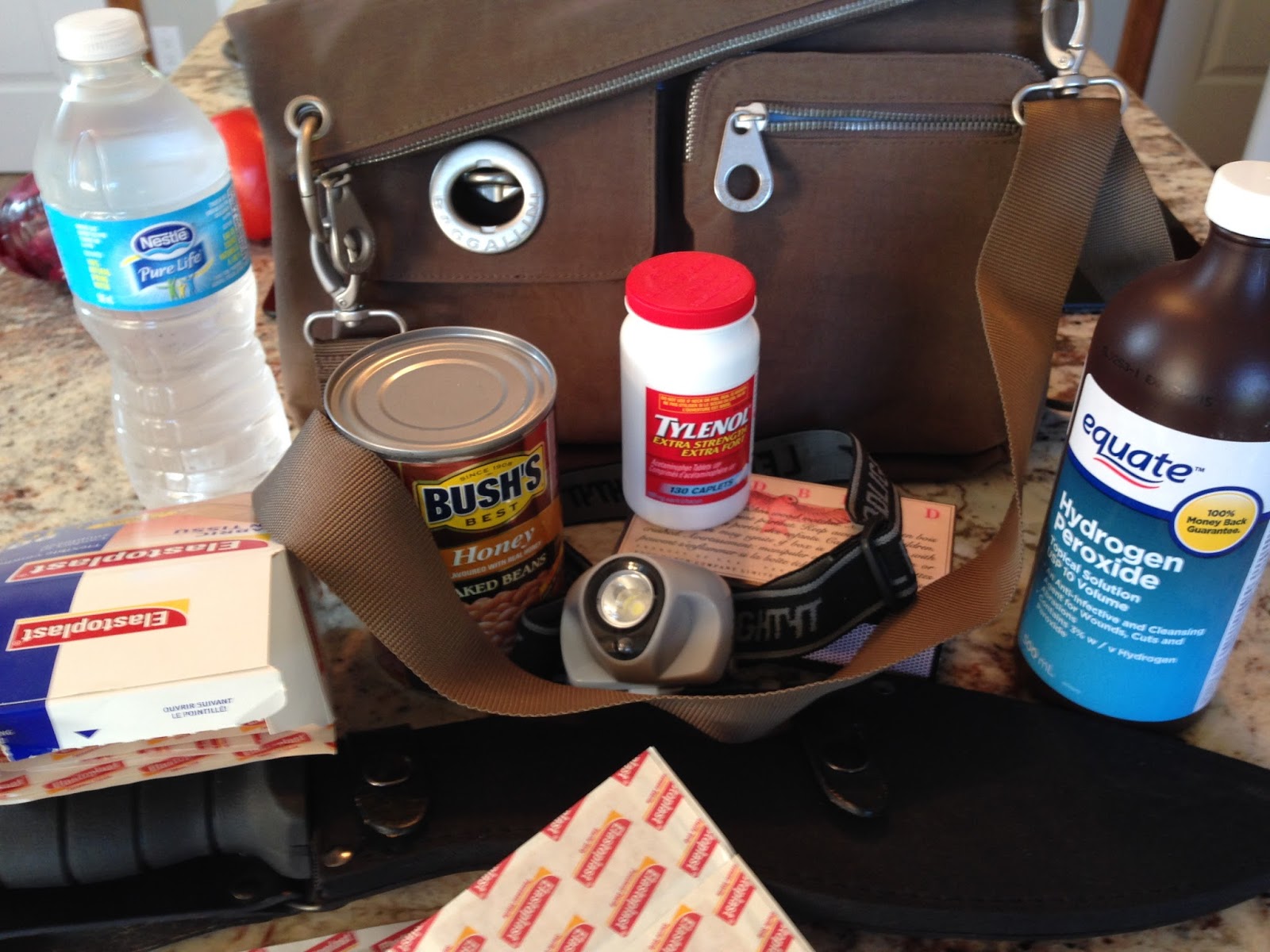
What you put in your kit is up to you. Some ideas are.........
Water.
Snacks.
Warm hat gloves socks and jacket.
Blanket.
Candles and candle holder.
Flashlight.
![]() | |
| I put this kit together in 5min. |
You should plan to be able to spend at least 48hrs stuck in your car in sub zero temperatures without a working engine. You can not count on your engine in a survival situation as it may not work for a number of reasons. If you do have a working engine that's a fantastic bonus but be careful. Many people have died from carbon monoxide poisoning while sleeping in a car. Never sleep with the car running. Just turn it on to warm up then shut it off.
Make sure the exhaust pipe is clear. Snow or other debris can build up around your vehicle trapping the exhaust fumes. Don't let drifting snow trap you. While snow is a great insulator and actually will make your vehicle warmer you don't want to be trapped. So open a door every hr or so and clear the snow away.
And be careful with your candles. Don't sleep with your candle burning. Cars have lots of flammable fabric and plastic and can go up like a torch if you knock over your candle.
The few ideas I have discussed here are just a start. I recommend you have a much better kit than the one on this page. But anything is better than nothing.
Thursday, September 3, 2015
11 Uses for a Smart Phone in an Emergency Situation!
| Use your cellphone camera to look around objects without exposing yourself. |
Flashlight. Makes a good flash light. Some even have a flash light App.
Memorization Tool. Camera still works and that could be handy for taking photos of things you need to remember. Like landmarks for navigating or things you are taking apart that you need to put back together.
Periscope. Camera makes a good periscope. You can use it for looking around corners with out sticking your head out.
Morale Booster. If it has music or games on it that could be a fantastic morale booster.
Compass. The compass on mine appears to work with out the Internet.
Fire starter. You can short out the battery to start a fire.
Stop Watch. Not sure what you would use this for but something may come up.
GPS Locators. The satellites that send out the GPS signals may still be working. So with a GPS App you can get your location.
Phone Calls. It may still work for a short time after the land lines go down. May not but you may need to contact family members or friends
Calculator. The calculator still works without the Internet and may be handy for the math impaired among us. Math is far more important than you may think for navigating, food rationing etc.
Secret Communications. You can password protect your phone and leave it for another person who knows your password to pick up. Then they can read or listen to your message. Could be handy.
If you are wondering how to keep your phone charged after the end of the world it may not be too hard. You can get a solar charger or charge it from a car battery. A car battery will charge it quite a few times before the car battery will need charging.
Wednesday, September 2, 2015
Could you survive an asteroid impact?
![]() |
The Earth gets hit every day but now and again we get hit by a big one. Could we survive a hit like the one that killed off the dinosaurs 65 million years ago. Some say we could not survive such a hit but I say we can.
We don't really know the effects of a big hit. But if we are to believe what some Scientists tell us then we can assume that the surface of the Earth will be almost completely sterilized by the fires that will consume every thing that will burn. The air will become super heated to perhaps 800 degrees. Earthquakes will rock the planet and giant waves will flood the coasts. Then the planet will freeze for several years due to lack of sunlight. But people can survive all that. They just need to be underground.
Every day all around the world thousands of people are underground at any given moment. Thousands of people work in mines and underground government bunkers. Many thousands more are riding in subways or train or road tunnels. Several hundred or perhaps even a few thousand peppers have underground bunkers they can access. And don't forget the hundreds of men who are deep under the ocean in nuclear subs all the time. So we can expect many thousands of people to survive the blast and the heat. Now we just need to feed them. So how do we feed people when the earth is one big sterilized cold dark rock? We will eat things that most people would not consider eating now.
We know that many lifeforms survived the event that killed the dinosaurs. Animals that lived under ground and under water were protected from the heat and the blast. And the same kind of animals can survive the next big hit, Animals like mice and rats and earth worms would survive and they may in fact be quite plentiful as the disaster may provide them with lots of dead cooked stuff to eat. The impact will also kill all the larger animals that would normally prey on them. I know it may sound unpleasant but rats, mice, and worms are really nutritious and they don't taste bad if you can get past the idea of eating them. Think alternate food sources!! Survivors would also be able to find insects and a few species of animals that live in the water such as Fish, crocodiles, turtles, frogs and many more.
Human beings are not designed to live on a diet of meat only so any survivors would also need to find a source of plant matter. Finding the necessary plants on a world that has been scorched may seem impossible but it may in fact not be. The roots of many plants are edible and may survive the initial high temperatures.Water plants may survive for some time until the coming cold temperatures and lack of sunlight kill them off.
Long term survival in such a hostile environment will be difficult. It could be many years before sunlight returns to levels sufficient for agriculture. However humans are amazingly adaptable creatures and our ability to use whatever we can find to our advantage should serve us well. For example our ability to scrounge things like glass from the wreckage of civilization and build greenhouses to grow plants sooner than nature would otherwise allow.
So with a little luck and ingenuity humanity might just survive an asteroid impact.
Credits: Image by idea go at freedigitalphotos.net
Tuesday, September 1, 2015
Bond Arms Snake Slayer or Perhaps Zombie Slayer
I just picked up my new Bond Arms Snake Slayer
(Well ok its my Wife's) I wont go into too much detail as you can find
plenty of info and reviews on line and I see no point in repeating all
that. So I will just concentrate on the anti Zombie potential of Snake
Slayer.
In brief the Snake Slayer is a cool little .410 shotshell/.45Colt pistol. It looks like an old fashioned Derringer but its made to modern standards and is bigger than the original Derringers. I should also say that you can get it in many other calibers just by swapping out the barrels but its the .410 shotshell/.45Colt that we are talking about as that's what I have.
As an anti Zombie weapon the Snake slayer has a few problems. I will get them out of the way first so we can talk about all the good features of this gun.
CONS AS A ZOMBIE KILLER GUN
1) Limited to 2 shots. Because its in the style of a Derringer it only holds 2 rounds and reloading is quite slow. The best reload time I can get is about 10 seconds. Someone younger and faster could probably do a little better but its still slow. When surrounded by hoards of the undead 10 seconds is an eternity.
2) Single action. As the Snake Slayer is single action you need to manually cook the hammer for each shot and that will also slow your rate of fire down a tad.
3) Bad sights. The sights on this little gun are just not that great. The rear sight is small and as the gun is all one colour (stainless steel) I find it quite hard to get a quick sight picture. However to be fair the gun is intended to be used at extremely close range so the sights are just a guide.
PROS AS A ZOMBIE KILLER GUN
Now for the good stuff.
1) Quality. The Snake Slayer is well made. It's a solid hunk of stainless steel that just looks really good. It feels like with a little care it would last a lifetime.
2) Reliability. I have found it quite reliable. I have had no issues with any brand of ammo that I have used. In fact I have had no misfires or any failures at all. I should say however that the gun has only had 250 rounds through it so something may crop up yet.
3) Its versatile. This gun is really a little tiny shot gun and as such its very versatile. With a simple change of shells you can go from shooting small animals like snakes or small birds to defending yourself from larger attackers like dogs or Zombies. A blast of .410 buckshot is devastating at close range. And with slugs or .45 Colt you can extend your range out to a considerable distance. I found it easy to ring a 12 inch steel gong at 60 yards from a seated position. I was able to hit it a few times from a standing position as well but I found it difficult. I should also mention that after about 5 shots it started to get a little hard on the hand. The recoil with slugs is managable but some may find it a bit much.
4) Easy to use. Its a really simple gun to use. Push the safety. Cock the hammer. Pull the trigger.
5) Safe. Because its so simple to use I believe it would be a gun that lends itself to safe use. The safety is large and simple and easy to use. Its a single action so one must cock the hammer before you can shoot it. It also has a rather stiff trigger pull that makes it hard for someone who is in a stressful situation to have an accidental discharge. You have to pull the trigger hard to make this gun go bang.
6) Easy to carry. At about 22 oz it's a nice easy gun to carry around. Yes you can find lighter guns but when you combine the light weight with the firepower of .410 buckshot its a nice carry gun.
So to sum it all up the Snake Slayer may not be the best Zombie gun but in my opinion its a handy little gun that would make a great back up gun or a good carry gun for most self defence situations. Just not hordes of the UnDead.
In brief the Snake Slayer is a cool little .410 shotshell/.45Colt pistol. It looks like an old fashioned Derringer but its made to modern standards and is bigger than the original Derringers. I should also say that you can get it in many other calibers just by swapping out the barrels but its the .410 shotshell/.45Colt that we are talking about as that's what I have.
As an anti Zombie weapon the Snake slayer has a few problems. I will get them out of the way first so we can talk about all the good features of this gun.
CONS AS A ZOMBIE KILLER GUN
1) Limited to 2 shots. Because its in the style of a Derringer it only holds 2 rounds and reloading is quite slow. The best reload time I can get is about 10 seconds. Someone younger and faster could probably do a little better but its still slow. When surrounded by hoards of the undead 10 seconds is an eternity.
2) Single action. As the Snake Slayer is single action you need to manually cook the hammer for each shot and that will also slow your rate of fire down a tad.
3) Bad sights. The sights on this little gun are just not that great. The rear sight is small and as the gun is all one colour (stainless steel) I find it quite hard to get a quick sight picture. However to be fair the gun is intended to be used at extremely close range so the sights are just a guide.
PROS AS A ZOMBIE KILLER GUN
Now for the good stuff.
1) Quality. The Snake Slayer is well made. It's a solid hunk of stainless steel that just looks really good. It feels like with a little care it would last a lifetime.
2) Reliability. I have found it quite reliable. I have had no issues with any brand of ammo that I have used. In fact I have had no misfires or any failures at all. I should say however that the gun has only had 250 rounds through it so something may crop up yet.
3) Its versatile. This gun is really a little tiny shot gun and as such its very versatile. With a simple change of shells you can go from shooting small animals like snakes or small birds to defending yourself from larger attackers like dogs or Zombies. A blast of .410 buckshot is devastating at close range. And with slugs or .45 Colt you can extend your range out to a considerable distance. I found it easy to ring a 12 inch steel gong at 60 yards from a seated position. I was able to hit it a few times from a standing position as well but I found it difficult. I should also mention that after about 5 shots it started to get a little hard on the hand. The recoil with slugs is managable but some may find it a bit much.
4) Easy to use. Its a really simple gun to use. Push the safety. Cock the hammer. Pull the trigger.
5) Safe. Because its so simple to use I believe it would be a gun that lends itself to safe use. The safety is large and simple and easy to use. Its a single action so one must cock the hammer before you can shoot it. It also has a rather stiff trigger pull that makes it hard for someone who is in a stressful situation to have an accidental discharge. You have to pull the trigger hard to make this gun go bang.
6) Easy to carry. At about 22 oz it's a nice easy gun to carry around. Yes you can find lighter guns but when you combine the light weight with the firepower of .410 buckshot its a nice carry gun.
So to sum it all up the Snake Slayer may not be the best Zombie gun but in my opinion its a handy little gun that would make a great back up gun or a good carry gun for most self defence situations. Just not hordes of the UnDead.
Saturday, August 29, 2015
Five Basic Suvival Foods to Keep You Alive
![]() |
| One Day's Rations of the Basic Survival Foods |
The FIVE basic survival foods you should be storing are:
1. Grains (Rice, Pasta, Wheat, Oats, Cornmeal)
One adult needs 3.5 kg or 7.5 lb of grains for one week
2. Legumes (Beans, Peas, Lentils)
One adult needs 1/2 kg or 1 lb of legumes for one week
3. Fats and Oils (Vegetable Oil, Mayonnaise, Peanut Butter, Olive Oil, Shortening)
One adult needs 3/4 cup of fats or oils per week
4. Salt
One adult needs 70 grams or 2/3 cup of salt for one week
5. Water
One adult needs between 1 to 3 L of water daily which is 7 to 21 L of water per week. Water requirements depend on the temperature, the amount of exercise the person is doing (how hard they are working) and their body weight.
I also include in my basic survival needs plan Sugar (sugar or honey) and Milk (powdered or canned)
Sugar (sugar, honey)
For one adult you should have 1/2 kg or 17 1/2 oz. or just over 2 cups or 1 lb of sugar per week
Milk (powdered milk, canned milk)
For one adult plan on 140 grams or about 1 cup of milk per week
These 7 essential basic foods will keep you alive for one week. You won't have very interesting or fun meals as you will mostly be eating such things as rice and beans but you'll survive.
Note that there are only 15 L of water (30 bottles) in this photo on the right. I personally store the maximum per adult per week which is 21 L.
I've included oatmeal and rice as my weekly grains as that gives me more variety in meals. What meals can I make with these basic foods?
Not much! That's the reality. But I can make hot oatmeal every morning with a bit of sugar (or honey)
I can make beans and rice for supper. Lunch could be lentil soup. I think you get the idea.
Remember, these are BASIC survival rations. They will keep ONE adult alive for ONE week.
I'll show you how to expand your food rations and make more variety of meals cheaply and easily in future blog posts.
Friday, August 28, 2015
Free Storage Containers for Emergency Survival Food Stores
Now you can go purchase containers but that gets expensive. So to save some money I have found a good source. Restaurants.
Many restaurants order food in bulk. Thing like pickles and fetta cheese. Often this stuff comes in nice air tight food grade pails that are just tossed out after use. I have one restaurant that gives me one large pickle pail each week for free and another that gives me all the pails I want for $1 each.
Caveat: the pails are not clean. I do have to spend a few minutes washing each one out but I figure the savings more than make up for my time.
So ask around at your local restaurants. You might be surprised at what you can get.
Oh one more thing - make sure the pails are completely dry before you put food in them!
Tuesday, August 25, 2015
Be Ready To Cross The Border as Your Bug-Out Plan
If you live within a few hundred miles of another country you may want to consider the idea of crossing the border.
Now crossing a border in a disaster is generally not a good idea as it involves all kinds of potential problems but one must consider the possibility that a situation could arise that would necessitate such a move.
So with that in mind it's always a good idea to keep your travel documents in good order and keep some foreign cash on hand.
Now crossing a border in a disaster is generally not a good idea as it involves all kinds of potential problems but one must consider the possibility that a situation could arise that would necessitate such a move.
So with that in mind it's always a good idea to keep your travel documents in good order and keep some foreign cash on hand.
If you live in Canada you will want some US dollars. Living in USA
you'll want Mexican and Canadian money. I'm sure you get what I'm
talking about
Another good idea if you live close to the border is to investigate locations for crossing without documents. I am not suggesting you break the law but if your life depends on it you would be wise to have a plan.
Monday, August 24, 2015
Flu Mask Kills Virus on Contact - On My Wish List
Flu season is going strong. It can spread easily and for people
who are already sick, it can be deadly. Now, there's a tool in the
fight against influenza. Sure you can get a flu shot now but you won't be getting them during a survival situation.
But good news! Doctors have developed a mask that can actually kill flu viruses on contact. Unlike regular masks, it has extra protections against influenza viruses and it can be used in the hospital or by patients who have no medical problems. Doctors say the mask is very effective.
Infection Control Specialist Dr. Lawrence said, "The mask is very efficient at screening out or filtering out at least 95 percent of the particulate that we can breathe in. It wicks up the virus if it's on the mask and it kills it before it can infect the patient."
The bio mask can be bought in drugstores.They are intended for surgeons and patients in hospitals, but if you have an underlying disease and want to protect yourself, this could be a great choice. I'm going to hunt for some next week so stay tuned to see if I can find any.
But good news! Doctors have developed a mask that can actually kill flu viruses on contact. Unlike regular masks, it has extra protections against influenza viruses and it can be used in the hospital or by patients who have no medical problems. Doctors say the mask is very effective.
Infection Control Specialist Dr. Lawrence said, "The mask is very efficient at screening out or filtering out at least 95 percent of the particulate that we can breathe in. It wicks up the virus if it's on the mask and it kills it before it can infect the patient."
The bio mask can be bought in drugstores.They are intended for surgeons and patients in hospitals, but if you have an underlying disease and want to protect yourself, this could be a great choice. I'm going to hunt for some next week so stay tuned to see if I can find any.
Sunday, August 23, 2015
Dehydrating Foods for Survival in a Zombie Apocalypse
![]() |
| Dehydrating Rhubarb |
You can also use your oven as long as you can set it to 125'. Some ovens won't set that low. Ours has a special dehydrator setting. We bought mesh to cover the oven racks so the fruit and vegetable pieces don't fall through.
We use ours to dehydrate rhubarb, lemons, celery, potatoes, yams, mushrooms, cabbage, bananas, apples, zucchini and more. We pick fresh from the garden. We buy bruised fruit on sale. We dehydrate leftovers that were sure to be tossed or fed to our pigs.
![]() |
| Cut the Rhubarb |
Check on the food after about 8 hours to be sure it's not over-drying. When it's hard or leathery, let it sit for a few minutes to cool then store in a clean glass jar. You don't have to buy fancy mason jars, just save and wash your jam jars, salsa jars, spaghetti sauce jars - whatever you have on hand.
Dehydrating foods to store for emergency situations is a space saver. Recently my wife took 10 cups of fresh rhubarb and dehydrated it. She ended up with 2 cups of dried rhubarb.
Label your jar with the name of what's inside, the date (we use month and year) and if you remember, the amount of fresh you started with. When you're ready to use the dried food, you will need to find out whether you leave overnight in water to rehydrate or toss it in as is and cook as dried or eat right from the jar.
Dried rhubarb for example rehydrates well if put in pan of water (you don't need much, just barely cover the dried fruit) and leave overnight. When we do apples we sprinkle sugar and cinnamon on some so we can eat them as a treat. Experiment. Remember to try things out now so that when the Zombie Apocalypse hits you aren't left wondering what the heck you do with the stuff you prepped and stored beforehand.
You don't get even drying in the cheaper dehydrators but we have one of those too. All my wife does is rotate the trays every few hours.
Caveat: I use the words Zombie Apocalypse tongue-in-cheek. It's a way of making us all sit up and take notice of what's going on in the world. Hopefully it will encourage you to get started on your Emergency Food Preparation and Survival Plan
Saturday, August 22, 2015
Epsom Salts - Amazing Emergency Supply item
Epsom Salts are an amazing Emergency Supply item. Did you know that
Epsom salts can be used for medicinal purposes, gardening and extending
the life of a battery? Epsom salt has numerous health benefits as well
as many beauty, household and gardening-related uses.
We stock Epsom Salts to extend battery life. With a solar panel like HQRP 50W Mono-crystalline Solar Panel 50 Watt 12 Volt in Anodized Aluminum Frame 10 Years Limited Power Warranty
we can charge a car battery and then use it for lighting or other
purposes. Epsom salts will extend that battery from 2 or 3 years to 4 or
5.
And we can use it in our First Aid Kit too. Epsom Salts/Magnesium Sulfate 10lbs
are available at Amazon.com
We stock Epsom Salts to extend battery life. With a solar panel like HQRP 50W Mono-crystalline Solar Panel 50 Watt 12 Volt in Anodized Aluminum Frame 10 Years Limited Power Warranty
And we can use it in our First Aid Kit too. Epsom Salts/Magnesium Sulfate 10lbs
Wednesday, August 12, 2015
You're Hunkered Down, But What's your Bug-IN Plan?
We've talked about bug-out plans and bug-out bags. But what if your plan
is to stay put. Perhaps you are already in a safe place, a place that
can be protected and has a stockpile of food. You still need a plan to
maintain and protect your family and food stores.
Think about what you need in a worse case scenario.
PLAN FOR THE WORST AND HOPE FOR THE BEST.
Store a minimum of one year's supply of food.
Have a way of getting fresh water.
Have a way of heating your safe place. Cut firewood now and store it for an emergency situation.
Develop a method of hunting for game. Do you know how to hunt? Do you have the necessary tools? Can you skin and butcher game?
Develop a protection and security strategy. Figure out how you are going to defend your home. What kinds of barriers or protection can you quickly set up in a worst-case scenario? Do you have sandbags? Or some other method of bullet proofing your home?
Decide on a method of cooking meals. Make sure that you have items you need for whatever plan you decide is best.
Bring more trusted people into your community. If the worst happens you will not be able to protect and defend yourself, your family, your property and your food stores unless you have several people involved as support.
Hide food supplies in other locations that you can access if necessary. For example what if the government is still functioning and stockpiling or hoarding of food is illegal. Do you want all your food stores confiscated? Make sure you have other food storage locations just in case. If you need to hide water too, do it. If you live in an area where water sources are plentiful, be sure you have contamination tablets hidden with your food.
Also you should have a fall-back location in case your safe place cannot be maintained. Not only do you need food stored at your secondary location, you need to hide (bury) food and water along your escape route from your primary safe place to your secondary location.
Make sure that every member of your family or community knows what their roles are and what tasks they are to complete in order to secure your safety location.
Do you have ideas to contribute? Use the comment area of this blog to post them. If you like this post feel free to tweet it or send it to Facebook or Google+ Share the link with other preppers if you find this helpful.
Think about what you need in a worse case scenario.
PLAN FOR THE WORST AND HOPE FOR THE BEST.
Store a minimum of one year's supply of food.
Have a way of getting fresh water.
Have a way of heating your safe place. Cut firewood now and store it for an emergency situation.
Develop a method of hunting for game. Do you know how to hunt? Do you have the necessary tools? Can you skin and butcher game?
Develop a protection and security strategy. Figure out how you are going to defend your home. What kinds of barriers or protection can you quickly set up in a worst-case scenario? Do you have sandbags? Or some other method of bullet proofing your home?
Decide on a method of cooking meals. Make sure that you have items you need for whatever plan you decide is best.
Bring more trusted people into your community. If the worst happens you will not be able to protect and defend yourself, your family, your property and your food stores unless you have several people involved as support.
Hide food supplies in other locations that you can access if necessary. For example what if the government is still functioning and stockpiling or hoarding of food is illegal. Do you want all your food stores confiscated? Make sure you have other food storage locations just in case. If you need to hide water too, do it. If you live in an area where water sources are plentiful, be sure you have contamination tablets hidden with your food.
Also you should have a fall-back location in case your safe place cannot be maintained. Not only do you need food stored at your secondary location, you need to hide (bury) food and water along your escape route from your primary safe place to your secondary location.
Make sure that every member of your family or community knows what their roles are and what tasks they are to complete in order to secure your safety location.
Do you have ideas to contribute? Use the comment area of this blog to post them. If you like this post feel free to tweet it or send it to Facebook or Google+ Share the link with other preppers if you find this helpful.
Tuesday, August 11, 2015
An Emergency Preparedness To-Do List
If you don't have an Emergency Survival To-Do List, maybe it's time to think about writing one up. Figure out what you've done and what you still need to do to prepare for an emergency situation.
What food have you stockpiled? What do you still need in the way of food for one year?
What about water?
What about weapons?
What about gathering and storing firewood ahead of time?
These are all things you need to think about as a Prepper.
This is not the same thing as your Emergency Survival Plan. Your Emergency Preparedness Plan is what you create first. It's your overall plan of how you and your family and friends plan to survive a catastrophe.
The To-Do list is what you're going to focus on in the next few months or during this year. For example our To-Do list includes the following:
* Buy more oats. We plan on breakfasts of Oatmeal each day and for a year's worth of such breakfasts we need a specific amount of oats. This year's focus is to reach our goal for enough oats for one year for 6 people.
* Buy more corn - need to reach our goal of enough for one year for 6 people
* Buy more dried beans - need to reach our goal of enough for one year for 6 people
* Make a manual pump for our drilled well. The time to build this is now, not after a disaster. We need more than one.
* Cut and store firewood. Firewood takes time to cure and it takes time, effort and gas to power a chain saw to cut trees. The time to do this is now
* Make a root cellar. We have a work weekend coming up in July. Both my step-sons are coming up to help me dig out under the mudroom to make a small root cellar. We need it now so that not only is it done and ready but my wife and I can experiment with how best to use it to keep our vegetables and fruits for prolonged periods of time
* Buy more baking powder - this is something my wife has worked out that she needs to bake one Irish Soda Bread loaf for 365 days for 6 adults.
* Extend the herb garden and rhubarb patch
* Plant squash and pumpkin this year in addition to last year's vegetables (zucchini, onions, peppers)
* Organize our available storage areas and figure out what items need to be kept in each. We have some climate controlled areas but we also have some with extreme fluctuations in temperature and humidity so we are starting to create a list of what items can go where. I'll go into detail on this in another blog post.
What's on your To-Do list?
What food have you stockpiled? What do you still need in the way of food for one year?
What about water?
What about weapons?
What about gathering and storing firewood ahead of time?
These are all things you need to think about as a Prepper.
This is not the same thing as your Emergency Survival Plan. Your Emergency Preparedness Plan is what you create first. It's your overall plan of how you and your family and friends plan to survive a catastrophe.
The To-Do list is what you're going to focus on in the next few months or during this year. For example our To-Do list includes the following:
* Buy more oats. We plan on breakfasts of Oatmeal each day and for a year's worth of such breakfasts we need a specific amount of oats. This year's focus is to reach our goal for enough oats for one year for 6 people.
* Buy more corn - need to reach our goal of enough for one year for 6 people
* Buy more dried beans - need to reach our goal of enough for one year for 6 people
* Make a manual pump for our drilled well. The time to build this is now, not after a disaster. We need more than one.
* Cut and store firewood. Firewood takes time to cure and it takes time, effort and gas to power a chain saw to cut trees. The time to do this is now
* Make a root cellar. We have a work weekend coming up in July. Both my step-sons are coming up to help me dig out under the mudroom to make a small root cellar. We need it now so that not only is it done and ready but my wife and I can experiment with how best to use it to keep our vegetables and fruits for prolonged periods of time
* Buy more baking powder - this is something my wife has worked out that she needs to bake one Irish Soda Bread loaf for 365 days for 6 adults.
* Extend the herb garden and rhubarb patch
* Plant squash and pumpkin this year in addition to last year's vegetables (zucchini, onions, peppers)
* Organize our available storage areas and figure out what items need to be kept in each. We have some climate controlled areas but we also have some with extreme fluctuations in temperature and humidity so we are starting to create a list of what items can go where. I'll go into detail on this in another blog post.
What's on your To-Do list?
Tuesday, August 4, 2015
What's Your Bug Out Plan and What's in Your Bug-Out Bag?
Do you have a bug-out plan? If you are going to survive a disaster you need a plan - either stay put or leave. A GOOD plan, as in Get Out Of Dodge.
Your Bug-Out Plan
Today I'm going to talk about a bug-out plan. First, where is your safe place? Have you got one in mind? Do you have your primary route planned? What about backup routes in case roads are blocked or impassable due to weather or other problems. You might not be able to count on GPS or your iPhone so be sure you've got old-fashioned paper maps in your bug-out bag.
Make sure every family member knows your family's emergency signal - that is, what you are going to do if it's time to hustle and get out. Is it a code word? Is it a blast on a whistle or fog horn? Define each family member's task - and practice the drill. You should aim for 10 minutes or less for grabbing what you need and getting to your car.
Even little children can have a task. In my family, my son has trained his children in their tasks. The 7 year old's job is to help his younger brother grab warm outdoor clothing and boots even if it's summer, then get them to the front door. Their older sister knows she helps with the youngest. Why warm clothing? Because he's prepared for a year or longer and they may need winter clothes later even if it's summer when the crisis happens.
Each child knows to grab their own bug-out bag (they call it a go-bag), one toy and get to the front door. There they wait for mom or dad to escort them to the vehicle.
You need a different plan for summer then you do for winter. Do you have a wagon for summer in case your car breaks down or is stuck somewhere? A wagon will allow you to pull younger children or bottles of water and bags of food. What about bicycles? And for winter you need a sled or toboggan in case you have to walk to your safe place. You could also pack snowshoes and make this a fun family activity ahead of time - learning to walk on snowshoes is exhausting and takes a bit of practice so why not plan some family snowshoeing outings?
Think about the weather and the geography of where you live. If you live in a big city you will want to plan a route that doesn't use the roads and highways that everyone else will be using. If you live in a deserted desert area, your choice of clothing and water will be very different from someone who lives in a rural snowy area.
Your Bug-Out Bag
You do have a bug-out bag for each family member don't you? A bug-out bag is a small backpack filled with essential gear and food to last you 72 hours or as long as it takes to get to your safe place.
What you put in your bug-out bag is up to you but experts recommend 3 to 4 litres of water per person per day. You will also need water contamination tablets in case you have to purify water from streams or lakes.
Non-perishable food is necessary - granola bars, trail mix, or MRE's (Meals Ready to Eat) if you have them. Look for lightweight foods and be sure every family member has some in their personal bug-out bag in case you get separated. It's a personal choice as to how much food you need to pack.
Take sleeping bags if possible. Duct tape, ropes, a tarp and a good knife may come in handy if you have to abandon the vehicle and sleep outside. I like to have a small knife for things like removing a splinter, cutting string or rope, and a larger knife for defense, chopping small branches off of trees, opening cans etc.
Rain gear is essential. Be sure everyone has something they can wear in case you're walking - ponchos, even garbage bags with a hole cut for the head are better than nothing
Have some extra clothing already packed - socks, undies, pants, sweaters, shorts etc. Be prepared for all types of weather. Lots of extra socks are important as your feet may get wet if you have to walk.
Take any medication you need. Throw in some basic medical supplies - bandages, antibacterial ointment, pain meds, anti-diarhea meds etc.
If a weapon is on your list as a necessity, make sure you have ammo for it ready to go. Ensure that every family member who is old enough has training in gun safety if you are taking a weapon with you. Being safe is important!
Everyone should have a signalling device such as a whistle in their go bag, and once you are on the road, it should be on each person's body. That way if the group gets separated you can hopefully find each other. Teach your children what to do if they get separated from you. Pack a signal mirror and a foghorn or a flaregun too.
What else might come in handy? A compass, flashlight, matches, something for collecting and boiling water.... the list is endless. If it's winter, take some tea candles and a clean tuna or salmon can to put the candle in, so you can have heat in your vehicle if you end up sleeping there.
And don't forget cash. We suggest you have some cash hidden and handy in case of an emergency situation. Remember electronics may be down so that ATM machine isn't going to work. Stores and banks might be closed.
BE PREPARED! BE SELF-SUFFICIENT! BE SAFE
Your Bug-Out Plan
Today I'm going to talk about a bug-out plan. First, where is your safe place? Have you got one in mind? Do you have your primary route planned? What about backup routes in case roads are blocked or impassable due to weather or other problems. You might not be able to count on GPS or your iPhone so be sure you've got old-fashioned paper maps in your bug-out bag.
Make sure every family member knows your family's emergency signal - that is, what you are going to do if it's time to hustle and get out. Is it a code word? Is it a blast on a whistle or fog horn? Define each family member's task - and practice the drill. You should aim for 10 minutes or less for grabbing what you need and getting to your car.
Even little children can have a task. In my family, my son has trained his children in their tasks. The 7 year old's job is to help his younger brother grab warm outdoor clothing and boots even if it's summer, then get them to the front door. Their older sister knows she helps with the youngest. Why warm clothing? Because he's prepared for a year or longer and they may need winter clothes later even if it's summer when the crisis happens.
Each child knows to grab their own bug-out bag (they call it a go-bag), one toy and get to the front door. There they wait for mom or dad to escort them to the vehicle.
You need a different plan for summer then you do for winter. Do you have a wagon for summer in case your car breaks down or is stuck somewhere? A wagon will allow you to pull younger children or bottles of water and bags of food. What about bicycles? And for winter you need a sled or toboggan in case you have to walk to your safe place. You could also pack snowshoes and make this a fun family activity ahead of time - learning to walk on snowshoes is exhausting and takes a bit of practice so why not plan some family snowshoeing outings?
Think about the weather and the geography of where you live. If you live in a big city you will want to plan a route that doesn't use the roads and highways that everyone else will be using. If you live in a deserted desert area, your choice of clothing and water will be very different from someone who lives in a rural snowy area.
Your Bug-Out Bag
You do have a bug-out bag for each family member don't you? A bug-out bag is a small backpack filled with essential gear and food to last you 72 hours or as long as it takes to get to your safe place.
What you put in your bug-out bag is up to you but experts recommend 3 to 4 litres of water per person per day. You will also need water contamination tablets in case you have to purify water from streams or lakes.
Non-perishable food is necessary - granola bars, trail mix, or MRE's (Meals Ready to Eat) if you have them. Look for lightweight foods and be sure every family member has some in their personal bug-out bag in case you get separated. It's a personal choice as to how much food you need to pack.
Take sleeping bags if possible. Duct tape, ropes, a tarp and a good knife may come in handy if you have to abandon the vehicle and sleep outside. I like to have a small knife for things like removing a splinter, cutting string or rope, and a larger knife for defense, chopping small branches off of trees, opening cans etc.
Rain gear is essential. Be sure everyone has something they can wear in case you're walking - ponchos, even garbage bags with a hole cut for the head are better than nothing
Have some extra clothing already packed - socks, undies, pants, sweaters, shorts etc. Be prepared for all types of weather. Lots of extra socks are important as your feet may get wet if you have to walk.
Take any medication you need. Throw in some basic medical supplies - bandages, antibacterial ointment, pain meds, anti-diarhea meds etc.
If a weapon is on your list as a necessity, make sure you have ammo for it ready to go. Ensure that every family member who is old enough has training in gun safety if you are taking a weapon with you. Being safe is important!
Everyone should have a signalling device such as a whistle in their go bag, and once you are on the road, it should be on each person's body. That way if the group gets separated you can hopefully find each other. Teach your children what to do if they get separated from you. Pack a signal mirror and a foghorn or a flaregun too.
What else might come in handy? A compass, flashlight, matches, something for collecting and boiling water.... the list is endless. If it's winter, take some tea candles and a clean tuna or salmon can to put the candle in, so you can have heat in your vehicle if you end up sleeping there.
And don't forget cash. We suggest you have some cash hidden and handy in case of an emergency situation. Remember electronics may be down so that ATM machine isn't going to work. Stores and banks might be closed.
BE PREPARED! BE SELF-SUFFICIENT! BE SAFE
Subscribe to:
Posts (Atom)
.png)